Students in the BSE Macroeconomic Policy and Financial Markets Program will obtain relevant knowledge about the central issues in Macroeconomic and Financial Economics analysis.
They will also learn the key tools, data, models, and techniques now being used by public and private institutions.
Policy-makers are often forced to make decisions under conditions of uncertainty, but the results of these decisions may directly influence a country’s overall economic performance. While a thorough understanding of aggregate economy dynamics is necessary for success, it is not entirely sufficient. Organizations must also be knowledgeable of the many sources of aggregate risk and uncertainty, and must rely on the analytical tools available to study the aggregate economy.
Financial and consulting firms increasingly utilize complex economic theories. Students will not only learn how to use these modeling and statistical techniques, but will conduct an independent master's project to learn how to apply these new skills to real empirical work.
Our program also offers students guest seminars and lectures by international academics and practitioners.
This program covers economic techniques such as dynamic stochastic general equilibrium (DSGE), vector autoregression (VAR), nowcasting and forecasting as well as data science and machine learning. Our graduates are prepared with an expert grasp of aggregate economy and financial fundamentals and can build macroeconomic and market forecasts - skills that consulting firms, investment banks, and government agencies are all in need of.
Given the applied, quantitative nature of this program, students will need to furnish their own laptop computer.
Program schedule:
By the end of the program, students must complete 60 ECTS (a total of 6 mandatory courses and 9 elective courses)
A master project, which will be supervised in regular meetings with an advisor, will allow each student to put their knowledge into practice and improve their writing and exposition skills.
A limited number of places will be available to practitioners who would like to enroll in specific courses.
The course offer displayed is for next year's edition. Course offer is subject to change.
The master project is a required component of all BSE Master's programs. Working individually or in groups, students use the tools and knowledge they've acquired during the entire year to explore a topic of their choice. A professor supervises throughout the project.
Examples of master projects from recent Macroeconomic Policy and Financial Markets cohorts
Select a project to view a summary on the BSE Voice, our student and alumni blog:
The Macro Program brings leading practitioners to campus to speak exclusively to BSE students. Past speakers include:
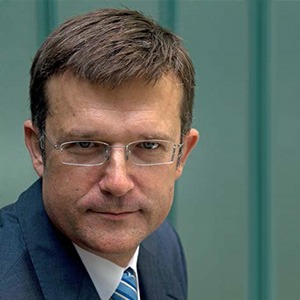
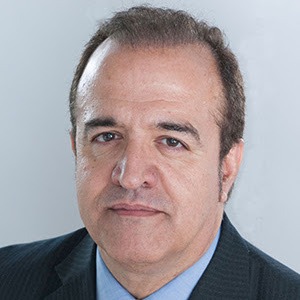
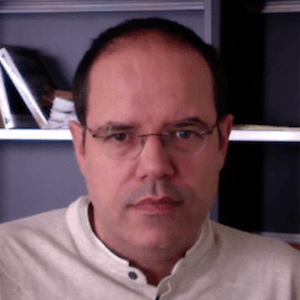
Rafael Domènech Head of Macroeconomic Analysis, BBVA Research
Rafael Doménech is Head of Macroeconomic Analysis of BBVA Research and Professor of Economics at the University of Valencia. He holds an MSc in Economics from the London School of Economics. He was Director General at the Economic Bureau of the Spanish Prime Minister (2007-8). He was also appointed by the Spanish Government as a member of the Expert Committee on the Sustainability Factor of the Public Pension System. He has published numerous articles in well-known international scientific journals on economic growth, human capital, business cycles, and fiscal and monetary policies. His most recent book on the Spanish economy, titled En Busca de la Prosperidad, was jointly written with Javier Andrés.
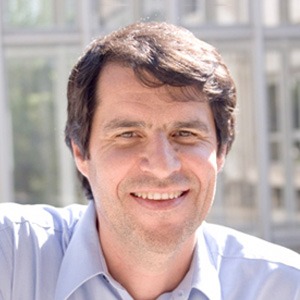
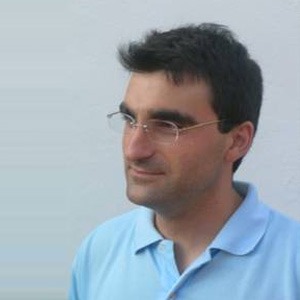
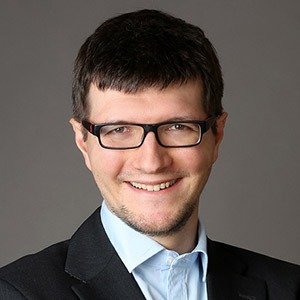
Atanas Kolev Senior Economist, European Investment Bank
Atanas Kolev is a Senior Economist at the Economics Department of the EIB. He joined the EIB in 2005 and over the years has worked on a wide range of topics related to investment and investment financing at the firm-, sector- and economy-wide level. He has been an organizer and contributor to the annual economics conference of the EIB on topics such as investment in the energy sector, in adaptation to climate change, public investment and infrastructure investment. Over the past two years, he has been economic editor of the EIB’s Economics department flagship publication on investment and investment finance. He holds a PhD in Economics from Universitat Autònoma de Barcelona.
Master's degree awarded
Upon successful completion of the BSE Macroeconomic Policy and Financial Markets Program, students will receive a Master's Degree in Specialized Economics Analysis awarded jointly with Universitat Autònoma de Barcelona (UAB) and Universitat Pompeu Fabra (UPF).
All Barcelona School of Economics Master's degrees have been recognized by the Catalan and Spanish Education authorities within the framework of the Bologna Process (in Spanish, “Master Universitario o Master Oficial”).
Can I enter another BSE Master's directly from this program?
Students who successfully complete the Macroeconomic Policy and Financial Markets Program are eligible for direct admission to the following programs, if they stay for a second consecutive year:
The Macroeconomic Policy and Financial Markets Program gave me the ability to analyze things from a wide perspective and it also gave me a lot of quantitative tools that I am using in my work to do forecasting and other tasks. The quality of the teachers is stunning and this really makes the difference from other programs
The Master's Program had a lot of practice and this impressed me a lot. I thought it would be mostly studying theories and topics reading papers, but we got a lot of knowledge and we went in-depth into using tools and coding.
The Master's Program was an extremely challenging and demanding experience in terms of studying and workload. It definitely enriched me and I would recommend it to other prospective students because it teaches the necessary tools to work in a macroeconomic field, which I have still been using on a daily basis.
In my opinion, the most important message you send when successfully completing this degree is that you are able to basically take up any challenge coming your way. It does sound kind of cheesy, but it is really the way you feel after graduation. This degree certifies your ability to work under pressure, to get familiar with very different and challenging topics in a short amount of time, to work in and adapt yourself to different groups and on top of all that you have a general technical aptitude. All these skills are important selling points when it comes to applying to any potential employers.
One thing I enjoy as an economic trainee at the EIB is working on topics directly related to what I have learnt at the BSE. Sharing outlooks with knowledgeable economists from all around Europe makes it a truly unique experience.
The master's has prepared me both directly and indirectly: directly, through courses such as Financial Economics, Empirical Finance, Banking and Financial Fragility, and Regulation in Financial Markets; and indirectly, by teaching me how to shape the right mindset in order to successfully approach economic and financial problems.
I chose BSE for being a highly recognized school offering rigorous programs that provide a strong combination of theoretical and practical knowledge. I was also motivated by first hand experiences from BSE alumni who were fully satisfied with the quality of their courses and their usefulness for their professional careers.

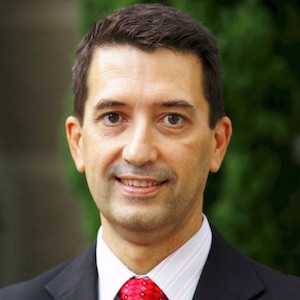 Rafael Domènech
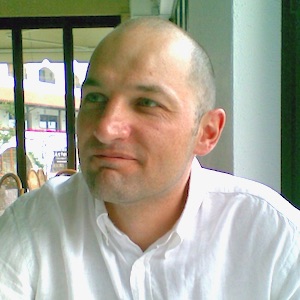 Atanas Kolev