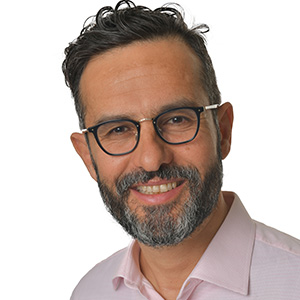
Quantitative Methods for Public Policy EvaluationInstructors: Stephan Litschig and Gabrielle Fack
The main challenge for policy evaluation is to establish a causal link between interventions and outcomes. The objective of this course is to introduce the main approaches used in the evaluation of public policies: randomized evaluations, natural experiments, the regression discontinuity design, selection on observables and difference-in-differences. The course presents strengths and weaknesses of each approach in terms of internal and external validity. During the morning sessions, each approach will be presented and illustrated with specific policies in the areas of labor, health, and education. In the afternoon sessions, students themselves (with help from the instructors) replicate the results of a widely-cited published study for each evaluation approach. 1. Randomized Evaluations (Experiments) Theory session: Duflo, E. R. Glennerster and M. Kremer, 2007, “Using Randomization in Development Economics Research: A Toolkit,” CEPR Discussion Paper No. 6059.
Katz L. F., J. R. Kling and J. B. Liebman, 2007, “Experimental Analysis of Neighborhood Effects,” Econometrica, 75(1): 83-119.
Miguel E. and M. Kremer (2004), "Worms: Identifying Impacts on Education and Health in the Presence of Treatment Externalities," Econometrica, 72(1): 159-217.
Practical session:
Krueger, A. B., 1999, “Experimental Estimates of Education Production Functions,” Quarterly Journal of Economics, 14(2): 497-562.
2. Natural or Quasi-Experiments and the Problem of Weak Instruments
Theory session:
John Snow (1855), On the Mode of Communication of Cholera, Churchill, London. Reprinted by Hafner, New York (1965).
Stock, J. H., J. Wright and M. Yogo, 2002, “A Survey of Weak Instruments and Weak Identification in Generalized Method of Moments,” Journal of Business and Economic Statistics, 20: 518 – 529.
Practical session:
Angrist J. D. and W. N. Evans, 1998, “Children and Their Parents’ Labor Supply: Evidence from Exogenous Variation in Family size,” American Economic Review 88:450-477.
3. Regression Discontinuity Designs
Theory session:
Lee, D. S., and T. Lemieux, 2009, “Regression Discontinuity Designs in Economics,” NBER Working Paper 14723, February, 2009.
Jens Ludwig and Douglas L. Miller (2007), “Does Head Start Improve Children’s Life Chances? Evidence from a Regression Discontinuity Design,” The Quarterly Journal of Economics, 122(1): 159-208.
Practical session:
Angrist, J. D. and V. Lavy, 1999, “Using Maimonides’ Rule to Estimate the Effect of Class Size on Scholastic Achievement,” Quarterly Journal of Economics, 114(2): 533-775.
4. Selection on Observables (regression control and matching)
Theory session:
J. D. Angrist and J.-S. Pischke, 2009, Mostly Harmless Econometrics, An Empiricist´s Companion, Princeton University Press.
Practical session:
Dehejia, R. and S. Wahba (2002), "Propensity Score Matching Methods for Non-experimental Causal Studies," Review of Economics and Statistics 84(1), 151-161.
5. Difference-in-Differences
Esther Duflo (2001), “Schooling and Labor Market Consequences of School Construction in Indonesia: Evidence from an Unusual Policy Experiment,” American Economic Review, 91(4): 795-913.
Mini-course schedule
Day
| Topic
| Instructor
| Mon
| Randomized Evaluations
| Stephan Litschig
| Tue
| Natural Experiments and Weak Instruments | Stephan Litschig | Wed
| Regression Discontinuity Designs | Stephan Litschig | Thu
| Selection on Observables
| Gabrielle Fack | Fri
| Difference-in-Differences | Gabrielle Fack |
Prof. Stephan Litschig (PhD, Columbia University) is Assistant Professor at University Pompeu Fabra and a Barcelona GSE Affiliated Professor. His research interests include development, public economics, political economy, and program evaluation. Prof. Gabrielle Fack (PhD, EHESS and Paris School of Economics) is Assistant Professor at Universitat Pompeu Fabra and a Barcelona GSE Affiliated Professor. Her research interests include public and applied microeconomics and housing economics. | |