
Contact GSE | FAQ | News | Events

Barcelona GSE: Graduate School of Economics

Home » Programs of Study » Continuing Education - Professional Courses » Systemic Risk and Prudential Policy

Continuing Education - Professional Courses

building

Mercè Rodoreda Building, site of the Barcelona Graduate School of Economics
Intensive Course on Systemic Risk and Prudential Policy

Barcelona GSE Intensive Course on Systemic Risk and Prudential Policy

Course overview

The objective of the course is to present state of the art research on systemic risk and to illustrate its implications for micro and macro prudential regulation. The course will begin with the definition, characterization and analysis of the determinants of systemic risk. The main models proposed in the literature will be explained, highlighting their strengths and weaknesses. Special attention will be devoted to illustrate the practical regulatory policy implications along with the main empirical findings.


The course will also cover the empirical quantitative techniques proposed in the literature for the measurement and prediction of systemic risk. The discussion will focus on the logic behind the various methodologies rather than technical aspects, emphasizing the ability to provide useful early warning signals.


The last part of the course will provide a critical summary of the prudential regulation initiatives for systemic risk, highlighting the limitations of current microprudential policy, the potential of the new macroprudential approach, and the costs and benefits of the proposed policy measures.

Key benefits: to understand...

  • What is – and what is not – systemic risk, and the determinants and implications of systemic risk
  • Build-up and crashes of asset and real estate bubbles, and credit bubbles, crunches and real effects of systemic risk
  • Pervasive incentives versus psychological dimensions to excessive risk-taking 
  • The relationship between monetary policy and financial stability
  • Contagion and liquidity models of systemic risk
  • Micro and macro prudential policy and their differences
  • Positive and negative aspects of the proposed regulation (Basel III, Dobb-Frank, Vickers report, ESRB, EU directives, EBA…) and other possible policy prudential tools
  • Systemic risk measurement, modelling and quantitative models for risk management (including: CoVaR, MES, Stress Testing) and the predictive ability of the systemic risk measures and early warning signals
  • Network analysis to measure systemic risk
  • Differences and similarities between previous crises and the current one

Course Schedule 2013

 Session Time   Professor
Wednesday, 22 May 2013
Registration13:30-14:00


Participant introductions and presentation of the Barcelona GSE 14:00-14:15


Introduction to Systemic Risk, Crises and Prundential Regulation
14:15-15:15

José-Luis Peydró

Monetary Policy, Financial Stability and Credit
15:30-17:00

José-Luis Peydró

 Coffee break
Monetary Policy and Asset Bubbles 17:30-19:30

Jordi Galí

Welcome dinner
Thursday, 23 May 2013
Asset Bubbles and Macroeconomics
9:30-11:00

Jaume Ventura

Coffee break
Credit Bubbles and Crunches 11:30-13:30

José-Luis Peydró

Lunch
Measurement of Systemic Risk
14:30-17:00

Christian Brownlees

Coffee break
Systemic Risk in Practice: Spain
17:30-19:30

José García-Montalvo

Friday, 24 May 2013
Contagion: Classical Approach and Liquidity Models 9:00-11:00

Xavier Freixas

Coffee break
Quantitative Methods for Network Analysis
11:30-13:30Christian Brownlees
Lunch
Financial Globalization and Systemic Risk 14:30-16:00

José-Luis Peydró

Case Studies on Financial Crises
16:15-18:15

Xavier Freixas

José-Luis Peydró

Saturday, 25 May 2013
Microprudential Regulation and Systemic Risk
9:00-11:00

Xavier Freixas

Coffee break
Macroprudential Regulation and Systemic Risk11:30-13:30

Xavier Freixas

Faculty

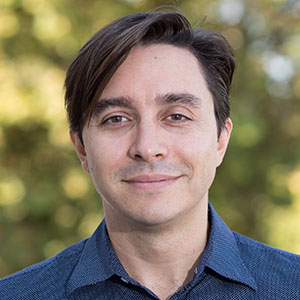
portrait

Xavier Freixas (UPF and Barcelona GSE), course director


Xavier Freixas is Professor at Universitat Pompeu Fabra and Barcelona GSE Research Professor. He is former president of the European Finance Association and chairman of Global Association of Risk Professionals (GARP) Risk Based Regulation Program. He has previously been Deutsche Bank Professor of European Financial Integration at Oxford University, Houblon Norman Senior Fellow of the Bank of England and joint executive director of FEDEA, and a professor at Toulouse University. 
He has been a consultant for the European Investment Bank, the New York Fed, the World Bank, the Inter-American Development Bank, and MEDD.
 He is currently consultant for the European Central Bank on macro-prudential policy. Prof. Freixas’ Microeconomics of Banking (joint with Jean-Charles Rochet and edited by MIT Press) is the standard reference textbook for Banking research worldwide. He is a leading expert on systemic risk.

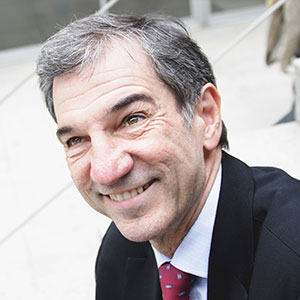
portrait

José-Luis Peydró (UPF and Barcelona GSE), course director


José-Luis Peydró is Professor at Universitat Pompeu Fabra, Research Fellow at IESE business school, and Barcelona GSE Affiliated Professor. In 2012-13 he has been consultant for the Federal Reserve Board and the IMF. His research on Banking and Systemic Risk has been published in the top journals in Economics and in Finance, featured in the Wall Street Journal and New York Times blogs, and cited by Board Members of the Federal Reserve, ECB and IMF. Prof. Peydró has presented his research on Systemic Risk in universities as Harvard and MIT and in the major central banks, and has written a survey chapter on Systemic Risk in Banking edited by Oxford University Press. José-Luis is currently an Advisor in the Financial Stability Department of Bank of Spain and has a leave of absence from the ECB. José-Luis has a PhD in Finance from INSEAD.

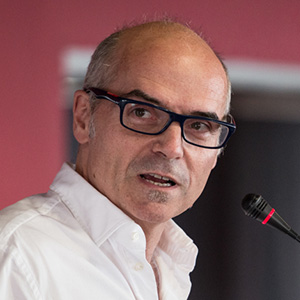
portait

 Jordi Galí (UPF and Barcelona GSE)


Jordi Galí is the Director of the Centre for Research in International Economics (CREI), Professor at the UPF and Researcher Professor at the Barcelona GSE. He held academic positions at New York University and Columbia University, and was Visiting Professor at MIT. In 2005 Prof. Galí received the Yrjö Jahnsson Award in Economics. He also won the Rei Jaume I Prize for Economics (2004), the VII Prize of the Catalan Society of Economics (2008) and the Catalan National Research Prize (2011). Prof. Galí has been cited as the most productive Spanish researcher from 1990-2004 (“Publishing Performance of Spanish Academics: 1970-2004” by D. Rodriguez, Spanish Economic Review, 2006). He has also been ranked as the 8th most cited researcher worldwide in Economics and Business (Thomson Scientific’s Essential Science Indicators SM, data from January 1997-October 2007). Prof. Galí holds Research positions at the Center for Economic Policy Research (CEPR) in London, and at the US National Bureau of Economic Research (NBER).


portrait

Christian Brownlees (UPF and Barcelona GSE)


Christian Brownlees is Assistant Professor at Universitat Pompeu Fabra and Barcelona GSE Affiliated Professor. He received his undergraduate degree in Economics and Quantitative Methods and PhD in Statistics from Università di Firenze. He was a Post-Doc Research Fellow at NYU Stern until 2011. Prof. Brownlees has been working extensively in the field of Systemic Risk. He has published a book chapter in Regulating Wall Street: The Dodd-Frank Act and the New Architecture of Global Finance (edited by Acharya, Cooley, Richardson and Walter).

portrait

José García-Montalvo (UPF)


José García-Montalvo is Professor at Universitat Pompeu Fabra and guest professor at Barcelona GSE. He has a PhD in Economics from Harvard University. He has been the Director of the Department of Economics and Business at the Universitat Pompeu Fabra, consultant for the OECD, the Interamerican Development Bank and the World Bank. He has written eleven books and more than 90 publications including American Economic Review and Review of Economics and Statistics. Prof. Montalvo is
 also the director of the Center 
for Research on the Economies of the Mediterranean (CREMed) and has been a visiting Professor at Harvard University. He is currently a Board Member at CatalunyaBank and the leading specialist on real estate in Spain.


portrait

Jaume Ventura (CREI, UPF and Barcelona GSE)


Jaume Ventura is a Senior Researcher at CREI, Professor at Universitat Pompeu Fabra, and Barcelona GSE Affiliated Professor. He is a former director of the International Macroeconomics Program of the CEPR. He received his PhD from Harvard in 1995. Prior to joining CREI and UPF, he was a tenured associate professor at MIT, where he won both the Undergraduate and the Graduate Economics Association ‘Best Teacher’ Award. He has also taught at the University of Chicago and INSEAD. Ventura has worked full-time for the World Bank, and acted as a consultant for the Inter-American Development Bank. Prof. Ventura is one of the world leading economists on the interaction between asset bubbles and macroeconomics.

Fees

Covers the tuition of all sessions, education materials, welcome dinner, all coffee breaks and lunch breaks.

Category

Fee

(until 15 May 2013)

Early-bird Registration

(until 22 Apr 2013)

Regular Fee

2,000 € 1,600 €

Alumni

1,000 €800 €

Special discounts are not cumulative.

Cancellation Policy

  • Cancellations until 15 May: Complete Refund, except for 200 € to cover administration expenses
  • Cancellations between 15 and 22 May: 50% of the registration fee charged
  • Cancellations after 22 May: Full fee charged (no refund)
Please note that all refunds will be processed after the conference in May. Download and read the full cancellation policy [pdf].


Home » Programs of Study » Continuing Education - Professional Courses » Systemic Risk and Prudential Policy


Contact GSE | RSS | Sitemap | Legal