
Contact us | FAQ | News | Events

Barcelona GSE: Graduate School of Economics
Director's LetterDescriptionDirectorCoursesFacultyPolicy SpecialistsStudent ProfileAlumni Outlook

International Trade, Finance, and Development Program 

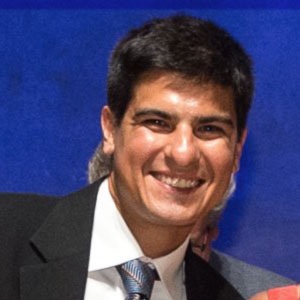
video "The ITFD program is unique because of the emphasis, not just on theory, but on how it can be used to explain current events, and to create practical policy applications in the real world."

Edward Corcoran '09
Economist, HM Treasury (London)
Watch video (02:01)


    Courses 2010-11


The International Trade, Finance and Development program is taught in three modules, proceeding from the more theoretical to the more applied. In addition, we offer a review course in mathematics and statistics in September (Syllabus, Schedule). This course is not mandatory but it is highly recommended for all students who do not have a strong mathematics background.
 

First Term: Core knowledge

In this term students take four twenty-hour courses and one forty-hour course that provide necessary background knowledge about international trade, finance, and development.


CourseHoursProfessor
The Rise of the Global Economy

20

Joachim Voth
Economic Growth and Development

20

Antonio Ciccone
International Finance 20 Jaume Ventura
Money and Exchange Rates
20Fernando Broner
Empirical Methods for Applied Analysis
40Kurt Schmidheiny


Second Term: Applications

In this term students take six twenty-hour courses that provide deeper and more specialized knowledge about international trade, finance, and development. They also start an independent study project under the supervision of a faculty member.


Course

Hours

Professor
International Trade

20

Alessandra Bonfiglioli
The Economics of Immigration
20

Francesc Ortega

Designing and Evaluating Development Programs 20Ghazala Azmat
Fighting Global Poverty

20

Elsa Artadi
Sovereign Debt and International Financial Architecture

20

Fernando Broner
Contemporary Macroeconomic Problems 20Jaume Ventura
Independent Study Project (phase 1) 20 Program Faculty


Third Term: Advanced Topics and Policy

In this term students take two advanced courses, one mandatory and one chosen out of four electives, and a sequence of policy courses. They also complete the independent study project and present their work to classmates and faculty members.


Course Hours Professor
Institutions and Economic Development
20
Nicola Gennaioli

Elective 1: Advanced Economic Growth and Development

40

Xavier Sala-i-Martín (20h)

Francesco Caselli (10h)

Omar Licandro (10h)

Elective 2: Investments

40

Ángel Leon

Elective 3: Topics in International Trade

40

Paula Bustos

Gino Gancia

Elective 4: Topics in International Finance

40Alberto Martín
Policy Lessons*40

Simon Evenett

José García-Montalvo

Eduardo Levy Yeyati

Independent Study Project (phase 2)
20Program Faculty


*The list of speakers is preliminary and subject to change.


First Term

In this term students take four twenty-hour courses and one forty-hour course that provide necessary background knowledge about international trade, finance, and development.


The rise of the global economy (Joachim Voth)
The process of globalization during the last few decades has many precedents in history. This course provides a long-run perspective of the forces at work, with an emphasis on the lessons history provides about the opportunities and potential dangers of globalization.


Economic growth and development (Antonio Ciccone)

Even small differences in long-run growth rates can produce staggeringly large differences in per capita income. The determinants of growth have been the focus of intense research efforts in recent decades. This course summarizes what has been learnt about the key determinants. It contrasts paradigmatic success stories with failures and looks for a common denominator that can influence the direction of policy.


International finance (Jaume Ventura)

This course explains the potential benefits from international investment and capital flows. It also highlights the problems that exist in international financial markets and why, in some cases, these potential benefits are not always realized. An understanding of the problems - or frictions" - is crucial for both policy analysis and international investment decisions.


Money and exchange rates (Fernando Broner)
This course provides the tools necessary to address these questions: How are real and nominal exchange rates determined? How is monetary policy conducted in advanced and emerging economies? When is a monetary union such as the Euro area optimal? Should emerging economies have fixed or flexible exchange rates? Are there high returns to be made by speculating on exchange rate movements?


Empirical methods for applied analysis (Kurt Schmidheiny)
Applied work requires the ability to compile, analyze, and interpret data. To that end, this course provides the basic tools of econometric analysis. The main emphasis will be on the econometrics of cross-sectional and panel data, which will be used in some of the courses in the second term.


Second Term

In this term students take six twenty-hour courses that provide deeper and more specialized knowledge about international trade, finance, and development. They also start an independent study project under the supervision of a faculty member.


International trade (Alessandra Bonfiglioli)
This course provides the tools necessary to answer these questions: Why do countries trade? Which countries benefit and which countries do not benefit from trade? What are the effects of trade on income inequality? What tools do countries use to carry out their commercial policy? What are the optimal policies in advanced and developing countries?


Economics of Immigration (Francesc Ortega)
What are the effects of immigration on the country of destination and on the country of origin? For the country of destination, how do these effects depend on cultural and socioeconomic differences between immigrants and natives? For the country of origin, what are the effects of brain drain and remittances?


Designing and evaluating development programs (Ghazala Azmat)
This course analyzes the determinants of economic development, focusing on the empirical methodologies used to analyze micro-data and evaluate development policies. The course discusses education, health, marriage, fertility, and gender and labour markets. New empirical strategies such as natural experiments and randomized evaluation of development policies are discussed.


Fighting Global Poverty (Elsa Artadi)

This course focuses on recent developments in the fight against global poverty.  It starts with the presentation of new techniques in impact evaluation that improve our learning on what works for the world’s poor.  Using this framework, we will discuss some lessons arising from the latest studies.  We will also analyze the main impediments that academics, policy makers, and NGO still face today to promote development and growth, and propose solutions.  We will finalize the course by highlighting the extra challenges that women face in poor countries.


Sovereign debt and international financial architecture (Fernando Broner)
Why do countries borrow? And why do they repay their debts in the absence of an international court? Why do countries, especially in the Third World, often borrow “too much”? Should odious debt be forgiven? What can be done to ensure that sovereign debt crises are not a major danger for long-run growth?


Contemporary macroeconomic problems (Jaume Ventura)
This course provides in-depth analysis of some of the key contemporary macroeconomic problems facing the world economy. Its goal is to teach students how to use formal models to think about real world developments. For each topic or problem, the course will develop theoretical results, review the empirical evidence and draw policy implications. The topics include the future of the welfare state and some proposals to reform it, and the potential implications of large global imbalances in the world economy.


Third Term

In this term students take two advanced courses, one mandatory and one chosen out of four electives, and a sequence of policy courses. They also complete the independent study project and present their work to classmates and faculty members.


In the advanced course students have the opportunity to specialize in a particular topic at a level that is appropriate to their background and interest. This course is selected out of four possible courses. Two courses are at a Masters level and can be taken by all students. The other two courses are at a Ph.D. level and can only be taken with permission from the faculty. The courses are:


Institutions and Economic Development (Nicola Gennaioli)
A growing body of work in social sciences shows that the working of economic systems in the real world critically depends on the legal and political institutions defining, regulating, and supporting markets. This course offers an overview of recent empirical and theoretical work on the part of this filed that seeks to improve our understanding of economic and financial development.


Elective 1: Advanced economic growth and development (Xavier Sala-i-Martin, Francesco Caselli, and Omar Licandro)

This is an advanced Masters course on economic growth and development. Topics include: development aid, measuring and understanding poverty, natural resources, ethnic conflicts, geography and development, legal and political institutions, democracy and dictatorships, demography and sustainable development.


Elective 2: Investments (Ángel Leon)

This is an advanced Masters course on international investment. This course considers financial market imperfections and investment strategies, emphasizing hedge funds, their categories, risks and returns and emerging market investment, both on debt and equity markets. This implies a careful assessment of risks that are specific to these types of strategies, in particular exchange rate regimes, financial fragility, and fiscal and monetary policies.


Elective 3: Topics in international trade (Paula Bustos and Gino Gancia)
This is an advanced Ph.D. course on international trade. Topics include: the basic models of trade, dynamics models of trade, trade policy, factor prices and wage inequality, firm dynamics and trade, multinationals and foreign direct investment, empirical tests of trade theories, and trade and productivity growth.


Elective 4: Topics in international finance (Alberto Martin)

This is an advanced Ph.D. course on international finance. Topics include: major puzzles in international finance, frictions in domestic and international financial market, sovereign risk, currency crises, international financial architecture, and capital flows and global imbalances.


The policy courses are taught by leading practitioners. In them, students learn how the knowledge they obtained in the Master can be applied in real world environments. Courses are taught by: Simon Evenett, Director of the International Trade and Economics Program at the Center for Economic Policy Research; José García-Montalvo, Director of the UPF Department of Economics and Business; and Eduardo Levy-Yeyati, head of Latin American Research at Barclays Capital.


Policy Specialists

Each year leading policy specialists from international organizations, NGOs, or private corporations join the program faculty.


Read more about policy specialists

Independent Policy Projects

"Students produce a policy memo on a topic relevant to policymakers today. Instead of the predominantly analytical forms of writing common in academia, the idea is to get students to think what actionable recommendations look like; how you build a convincing case for a policymaker; deal with possible counterarguments; and present the whole in a lucid fashion."


Prof. Joachim Voth, Program Director
Read more from his blog


Selected policy memos by ITFD students, available for download [pdf]:


projects

projects

Students present their projects before an audience of their peers as well as program professors Joachim Voth, Fernando Broner, and Jaume Ventura. Prof. Antonio Ciccone (not pictured) was also in attendance.

Barcelona GSE » Programs » International Trade, Finance, and Development
Director's Letter Description Director Courses Faculty Policy Specialists Student ProfileAlumni Outlook

Contact us | RSS | Sitemap | Legal