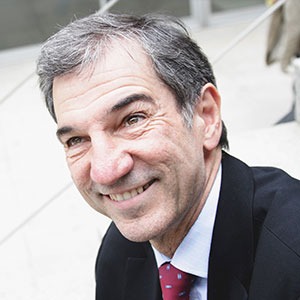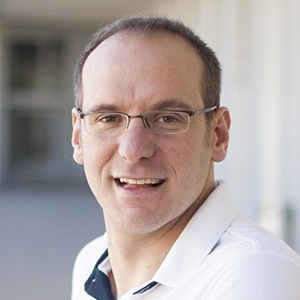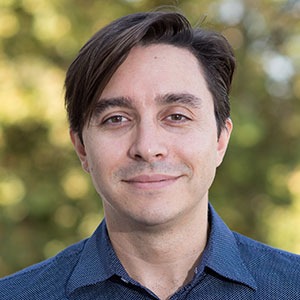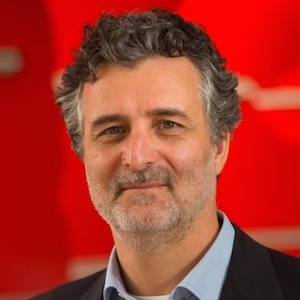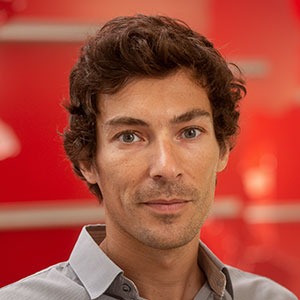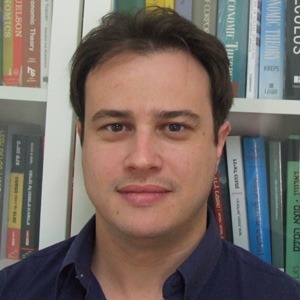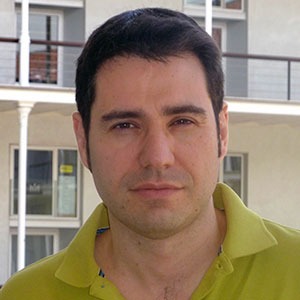
Program Director
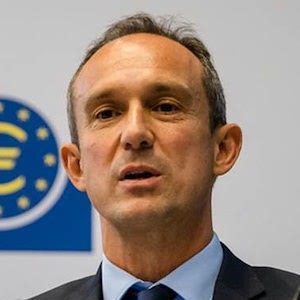
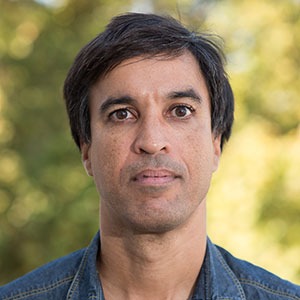
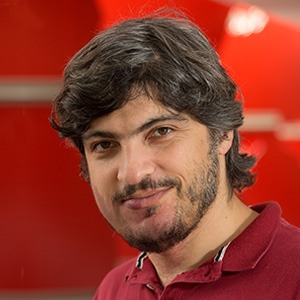
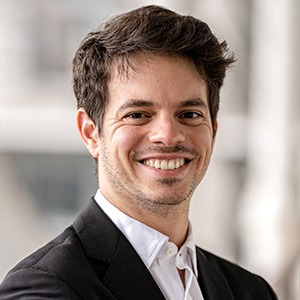
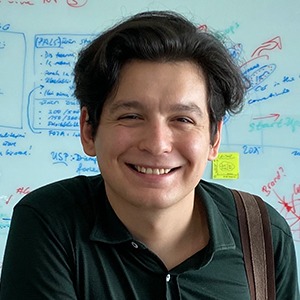
Steering Committee
The increasing complexity of financial markets demands greater modeling techniques and a deeper understanding of financial data. The Master's in Financial Economics at the BSE is designed to prepare you for these challenges.
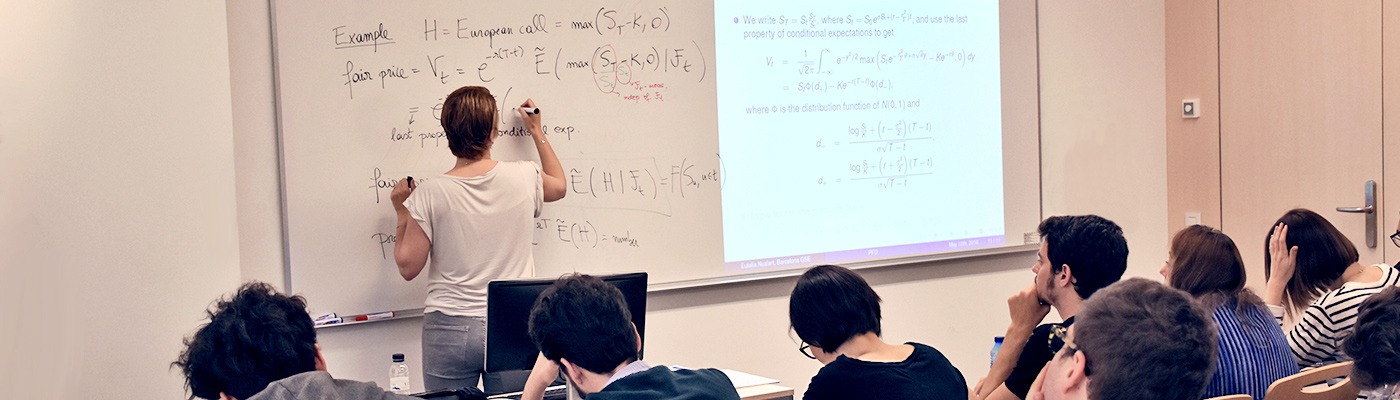
The BSE Financial Economics Program builds on the School's outstanding faculty in Finance, Economics, Econometrics and Data Science. The program is aimed at students that seek an interdisciplinary approach that combines Finance and Economics. It is designed to give students the strong modeling techniques, econometric tools, and advanced coding skills needed for the top jobs in banking, consulting and fintech.
The Financial Economics Program is built around three pillars:
Concepts: acquire an in-depth understanding of the theory of Finance and Economics
Modeling: learn how to construct and implement financial models
Data analysis: apply Econometrics, Statistics and Data Science techniques to analyze complex financial data
Our graduates excel at designing and implementing complex financial and economics models; they have a strong understanding of the theory; and can apply their programming skills (R, Matlab, Stata and Python) to the analysis of large datasets.
Thanks to their ability to analyze and model data intensive problems, and to communicate results effectively, our graduates are in high demand from a wide range of industries, including consulting, banking, risk management and derivatives trading, portfolio and investment management, fintech, and central banks.
Most of our Financial Economics students have a background in Economics or in a quantitative subject. Proof will be required showing an undergraduate degree with a substantial number of quantitative subjects, or GRE to demonstrate quantitative ability (however, the GRE is not mandatory for this program).
A key advantage of our Master's in Financial Economics is that students can benefit from BSE top faculty teaching in a wide range of courses in their field of expertise. In particular, students with an interest in quantitative techniques can take electives in advanced econometric methods, optimization techniques, advanced programming, and machine learning, while students who are interested in economics topics can choose among the advanced economics courses in macroeconomics, monetary policy and exchange rates.
The course offer displayed is for next year's edition. Course offer is subject to change.
Course list for current students
Students must complete a total of 60 credits. Exceptionally, students may take a maximum of 12 ECTS per term and 15 ECTS in total from electives outside the Financial Economics program offer. Criteria for acceptance into these courses may vary, and approval from both program directors is required.
The master project is a required component of all BSE Master's programs. Working individually or in groups, students use the tools and knowledge they've acquired during the entire year to explore a topic of their choice. A professor supervises throughout the project.
Examples of master projects from recent Financial Economics cohorts
Select a project to view a summary on the BSE Voice, our student and alumni blog:
Class of 2023
Class of 2022
Class of 2021
Upon successful completion of the BSE Financial Economics Program, students will receive a Master's Degree in Economics and Finance awarded jointly with Universitat Pompeu Fabra (UPF).
All Barcelona School of Economics Master's degrees have been recognized by the Catalan and Spanish Education authorities within the framework of the Bologna Process (in Spanish, “Master Universitario o Master Oficial”).
The Financial Economics Program provides a solid foundation for both professional and academic career paths.
Around 84% of recent graduates have used the Financial Economics Program as a terminal Master’s degree that qualifies them for competitive, technically demanding jobs in the professional world.
Around 16% of recent Financial Economics Program graduates have chosen to continue with more graduate or postgraduate study at top institutions all over the world. Some do so immediately after completing the BSE Master’s. Others choose to get one or more years of work experience, such as a central bank traineeship, before pursuing a PhD.
There are two PhD programs in the BSE community: the Graduate Program in Economics, Finance and Management (GPEFM) at Universitat Pompeu Fabra (UPF) and the International Doctorate in Economic Analysis (IDEA) at Universitat Autònoma de Barcelona (UAB).
While these PhD programs are organized jointly with the BSE, they each have their own distinct admissions processes.
UPF PhD (GPEFM)
The main point of entry to the UPF PhD program is the BSE PhD Track Program. The PhD Track Program is Year 1 of the UPF PhD.
Students in the BSE Financial Economics Program with outstanding performance in their courses have the opportunity to be admitted to the PhD Program before finishing the Financial Economics Program. Those students will have to apply for admission to the PhD Program at the beginning of the second term of the Financial Economics Program. Admission will be decided in March. Admitted students will need to follow two more years of coursework to move to the PhD research and dissertation phase.
UAB PhD (IDEA)
Entry to the IDEA PhD program is through the IDEA Master in Research. BSE students can visit the IDEA website to learn more about the admissions process, which is the same for BSE students and external applicants.
BSE master's graduates have gone on to enter some of the most prestigious and competitive doctoral programs in the world, including:
Examples of recent placements:
Students who successfully complete the Financial Economics Program are eligible for direct admission to the following programs, if they stay for a second consecutive year:
Master’s Degree in Data Science:
OR
Master’s Degree in Specialized Economic Analysis:
A 20% discount will be applied on the second program's tuition fees. All BSE Alumni are eligible for this discount at any time.
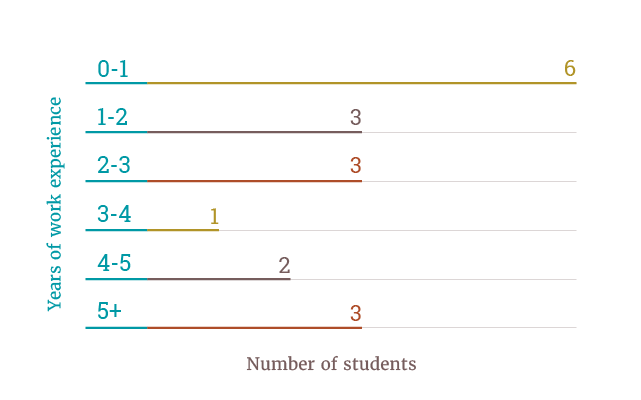
Financial Economics Student Profile 2023-24
18 students from 15 countries (89% international)
Most represented countries this year:
Most common undergraduate backgrounds:
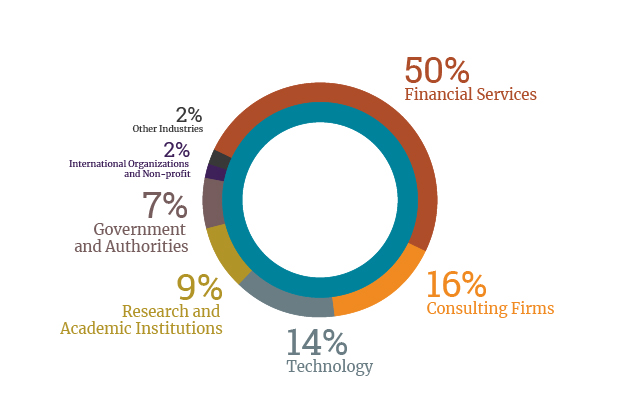
Financial Economics alumni career paths
An overview of Financial Economics career paths for recent cohorts (Class of 2021, 2022, 2023)
© Barcelona Graduate School of Economics. All rights reserved.